Publications
Peer-reviewed publications in reversed chronological order.
2026
- IEEE S&P 2027
 Words Speak Louder Than Code: Investigating Cognitive Heuristics in LLM-Based Code Vulnerability DetectionAsif Shahriar, Hongyu Cai, Hadjer Benkraouda, Gang Wang, and Z. Berkay CelikIn 48th IEEE Symposium on Security and Privacy (Oakland), 2027
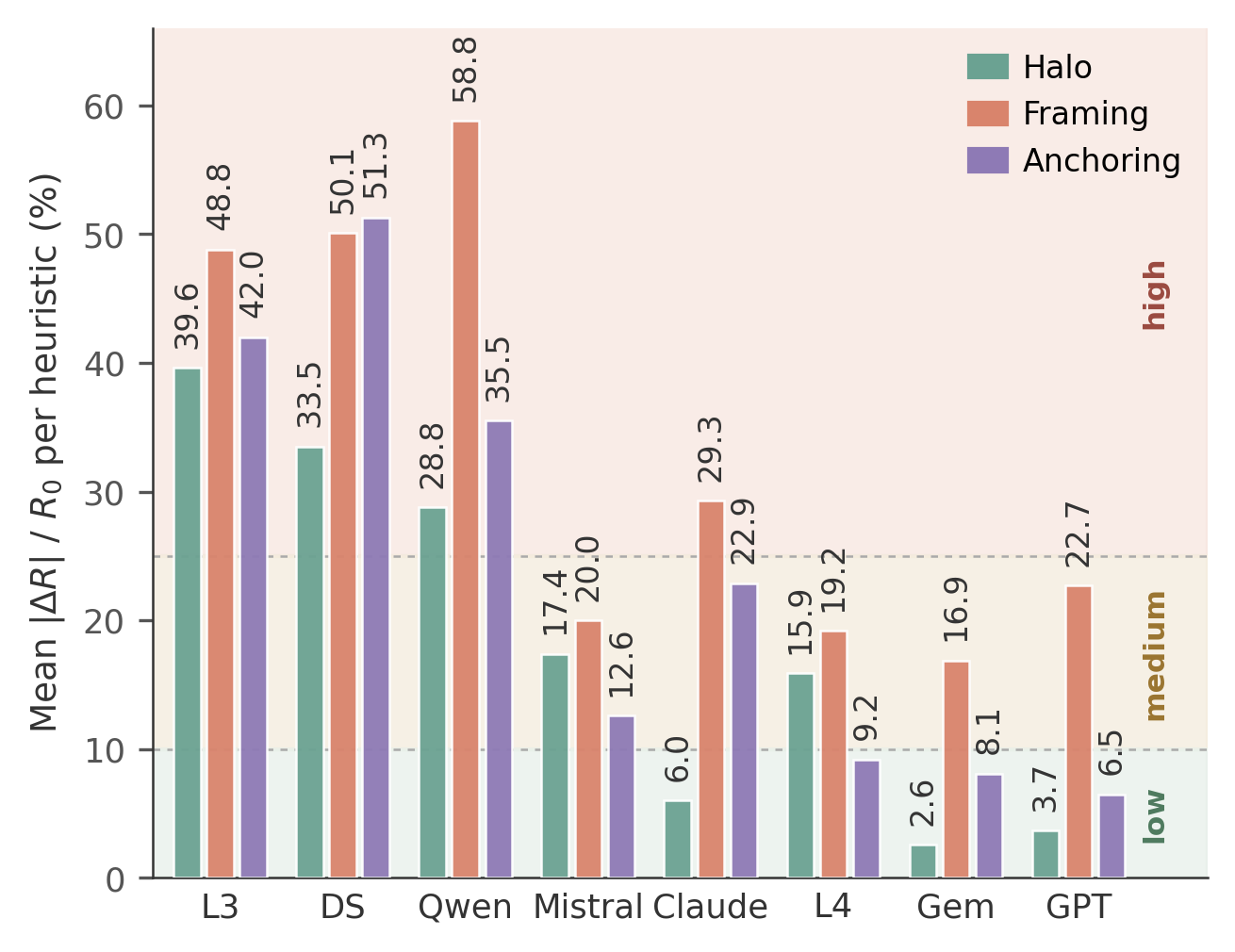
Researchers and practitioners increasingly apply Large Language Models (LLMs) for automated vulnerability detection. Recent work has shown that LLMs are susceptible to the same cognitive heuristics that bias human judgment. Yet, no work has investigated whether these heuristics affect a model’s assessment of code vulnerabilities. In this paper, we present the first systematic exploration of cognitive heuristics in LLM-driven code vulnerability detection. We introduce a controlled framework that holds the code fixed and only varies the surrounding context to trigger three cognitive heuristics: the halo effect through author attribution, the framing effect through task objectives and consequences, and the anchoring effect through prior analysis results. Within this framework, we evaluate eight LLMs across three programming languages and perform both quantitative and code-level analyses. Our findings demonstrate that all evaluated models are susceptible to these heuristics. Cross-model average susceptibility is highest for framing at 33.2%, followed by anchoring at 23.5% and halo at 18.4%. Code-level analysis reveals that vulnerabilities that require semantic reasoning for detection are more susceptible to cognitive heuristics than those identifiable through pattern matching. Furthermore, models often change their verdict from safe to vulnerable based on the cognitive condition, without accurately identifying the actual vulnerability. To highlight the practical impact, we demonstrate a proof-of-concept black-box cognitive attack that can suppress up to 97% of previously detected vulnerabilities. These findings indicate that cognitive susceptibility is a consistent and exploitable property of LLM-based vulnerability detection.
@inproceedings{shahriar2026wordsspeaklouder,
  title = {Words Speak Louder Than Code: Investigating Cognitive Heuristics in LLM-Based Code Vulnerability Detection},
  author = {Shahriar, Asif and Cai, Hongyu and Benkraouda, Hadjer and Wang, Gang and Celik, Z. Berkay},
  booktitle = {48th IEEE Symposium on Security and Privacy (Oakland)},
  year = {2026},
  display_year = {2027},
  doi = {https://doi.org/10.48550/arXiv.2606.30587}
}
2025
- IEEE TIFS
 5GPT: 5G Vulnerability Detection by Combining Zero-Shot Capabilities of GPT-4 With Domain Aware Strategies Through Prompt EngineeringAsif Shahriar, Syed Jarullah Hisham, K. M. Asifur Rahman, Ruhan Islam, Md. Shohrab Hossain, Ren-Hung Hwang, and Ying-Dar LinIEEE Transactions on Information Forensics and Security, 2025
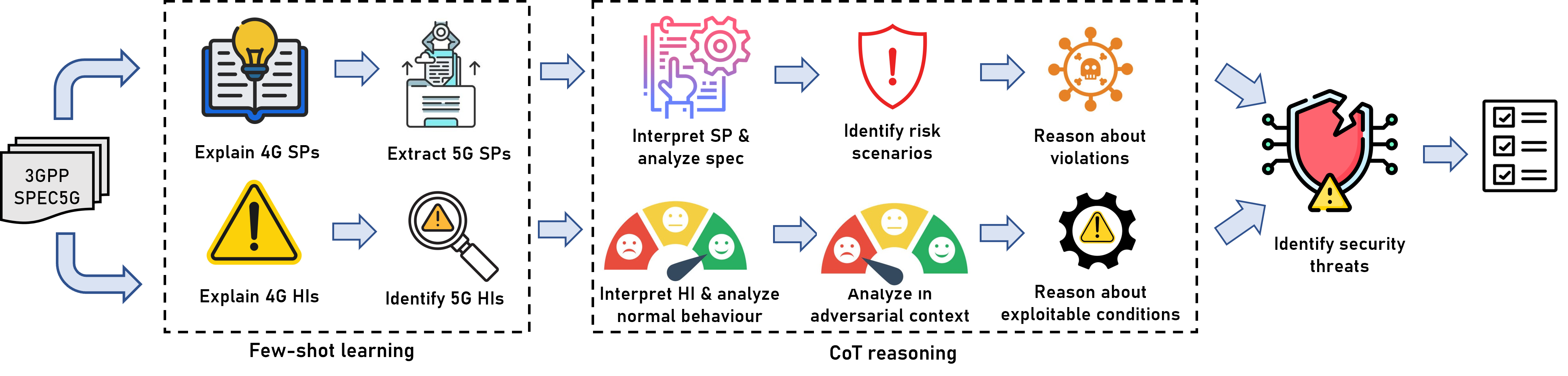
Identifying vulnerabilities in complex 5G network protocols is a challenging task. Manual analysis is time-consuming and often inadequate. Modern ML and NLP methods, though effective, are resource-intensive and struggle to find implicit vulnerabilities. In this research, we utilize GPT-4’s advanced language understanding to detect vulnerabilities directly from 5G specifications. To assess GPT-4’s fundamental capabilities in this domain, we first adopt a zero-shot approach that relies solely on the specification text without external guidance. For detecting more sophisticated vulnerabilities that require deep contextual understanding, we introduce a novel domain-aware strategy, where we explicitly teach GPT-4 about security properties and hazard indicators from related works using few-shot learning. We further employ chain-of-thought prompting to guide the model through structured reasoning steps to identify violations or exploitations that may lead to vulnerabilities. A two-tier filtering process ensures that only promising test-cases are retained. Our method has identified 47 potential vulnerabilities in 5G mobility management procedures, including 27 previously unreported issues, and generated corresponding test-cases. Simulating 14 of them, we have found 9 vulnerabilities, five of which are new. The zero-shot approach is effective in detecting procedural and validation flaws, while the domain-aware method excels in finding protocol violations and advanced attack scenarios. These findings validate our methodology and demonstrate its strength in discovering both known and novel vulnerabilities in 5G protocols.
@article{shahriar20255GPT, title = {{5GPT: 5G Vulnerability Detection by Combining Zero-Shot Capabilities of GPT-4 With Domain Aware Strategies Through Prompt Engineering}}, author = {Shahriar, Asif and Hisham, Syed Jarullah and Rahman, K. M. Asifur and Islam, Ruhan and Hossain, Md. Shohrab and Hwang, Ren-Hung and Lin, Ying-Dar}, journal = {IEEE Transactions on Information Forensics and Security}, volume = {20}, pages = {7045--7060}, year = {2025}, doi = {10.1109/TIFS.2025.3586480}, } - EMNLP 2025
 Inceptive Transformers: Enhancing Contextual Representations through Multi-Scale Feature Learning Across Domains and LanguagesAsif Shahriar, Rifat Shahriyar, and M Saifur RahmanIn Proceedings of the 2025 Conference on Empirical Methods in Natural Language Processing, 2025
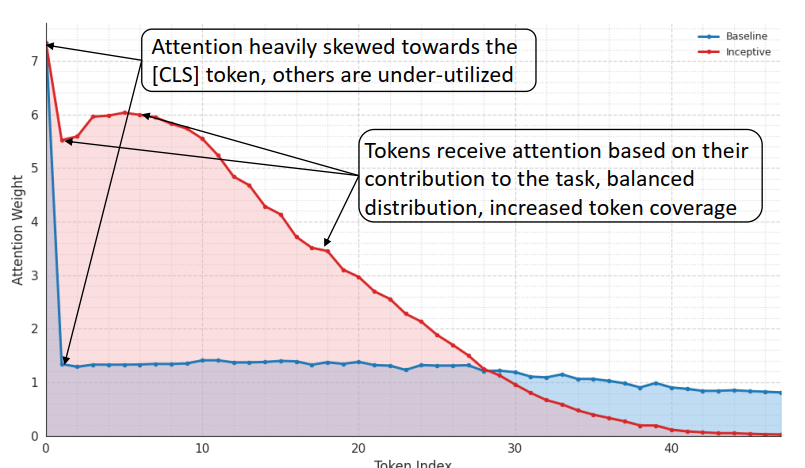
Encoder transformer models compress information from all tokens in a sequence into a single [CLS] token to represent global context. This approach often dilutes fine-grained or hierarchical features, leading to information loss in downstream tasks where local features are important. To remedy this, we propose a lightweight architectural enhancement in the form of an inception-style 1-D convolution module that sits on top of the transformer layer and augments token representations with multi-scale local features. This enriched feature space is then processed by a multi-headed self-attention layer that dynamically weights tokens based on their task relevance. Experiments across five diverse tasks, covering both short and long form texts, show that our framework consistently improves both general-purpose (RoBERTa, DeBERTa v3, ModernBERT), domain-specific (BioBERT, BERTweet, CT-BERT), and multilingual models (XLM-R, BanglaBERT); outperforming the baselines by 1% to 14% while maintaining efficiency. Ablation studies confirm that multi-scale convolution performs better than any single-kernel, and removing the self-attention layer hurts performance.
@inproceedings{shahriar2025inceptivetransformers, title = {Inceptive Transformers: Enhancing Contextual Representations through Multi-Scale Feature Learning Across Domains and Languages}, author = {Shahriar, Asif and Shahriyar, Rifat and Rahman, M Saifur}, booktitle = {Proceedings of the 2025 Conference on Empirical Methods in Natural Language Processing}, year = {2025}, doi = {https://doi.org/10.18653/v1/2025.emnlp-main.1312}, } - ArXiv 2025
 A Survey on Agentic Security: Applications, Threats and DefensesAsif Shahriar, Md Nafiu Rahman, Sadif Ahmed, Farig Sadeque, and Md Rizwan ParvezIn ArXiv, 2025
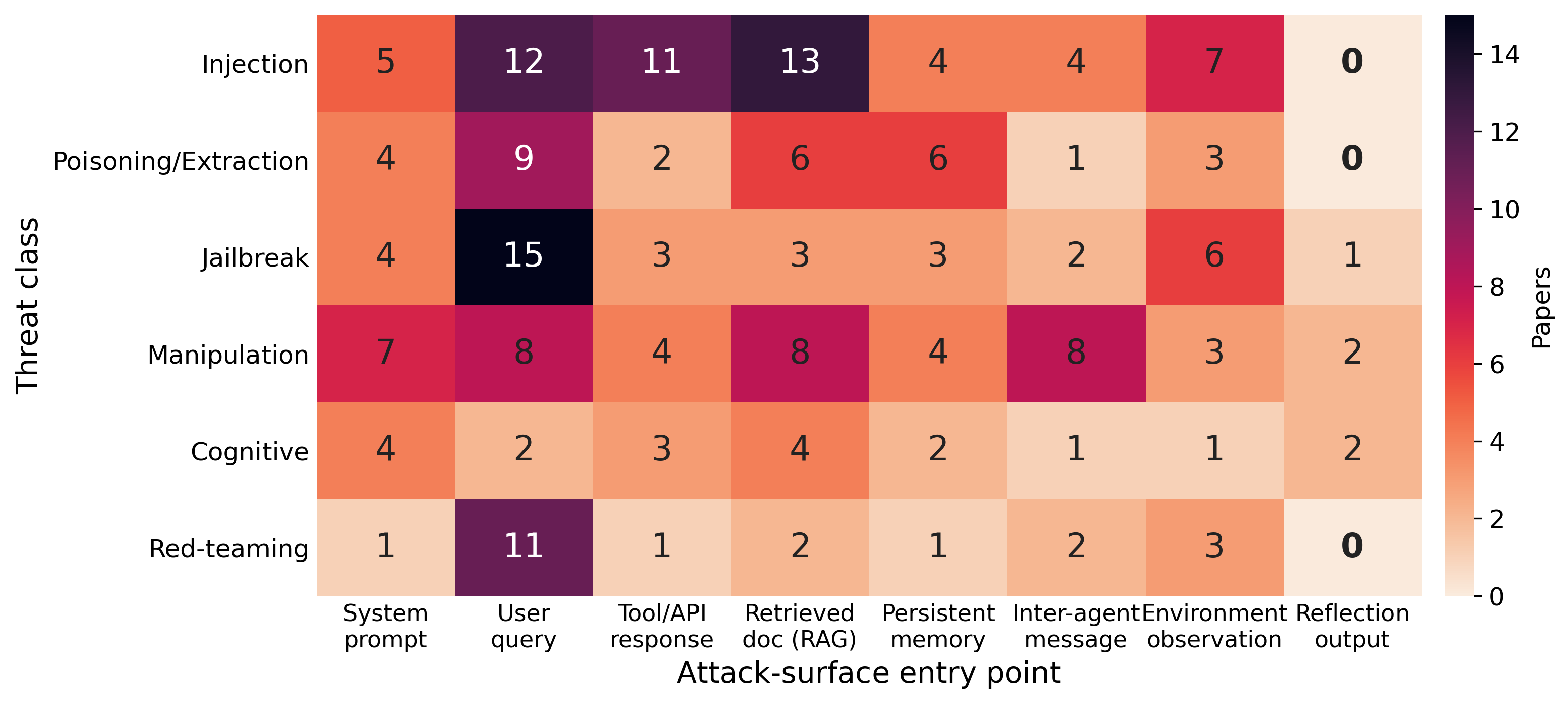
The rapid shift from passive LLMs to autonomous LLM-agents marks a new paradigm in cybersecurity. While these agents can act as powerful tools for both offensive and defensive operations, the very agentic context introduces a new class of inherent security risks. In this work we present the first holistic survey of the agentic security landscape, structuring the field around three interdependent pillars: Applications, Threats, and Defenses. We provide a comprehensive taxonomy of over 150 papers, explaining how agents are used, the vulnerabilities they possess, and the countermeasures designed to protect them. A detailed cross-cutting analysis shows emerging trends in agent architecture while revealing critical research gaps in model and modality coverage.
@inproceedings{shahriar2025surveyagenticsecurityapplications,
  title = {A Survey on Agentic Security: Applications, Threats and Defenses},
  author = {Shahriar, Asif and Rahman, Md Nafiu and Ahmed, Sadif and Sadeque, Farig and Parvez, Md Rizwan},
  booktitle = {ArXiv},
  year = {2025},
  doi = {https://doi.org/10.48550/arXiv.2510.06445}
}
2024
- NSysS 2024XLNet-CNN: Combining Global Context Understanding of XLNet with Local Context Capture through Convolution for Improved Multi-Label Text ClassificationAsif Shahriar, Debojit Pandit, and M Saifur RahmanIn Proceedings of the 11th International Conference on Networking, Systems, and Security, 2024
This paper won the best paper award at NSysS 2024.
Multi-label text classification (MLTC) is the task of assigning multiple relevant labels to a text, which is particularly challenging due to the complex interdependencies between labels and the imbalanced distribution of label frequencies. Domain-specific BERT variants, such as BioBERT, CT-BERT, and HateBERT, are pretrained on specialized corpora, which enables them to capture the unique terminology and patterns within specific domains, thus enhancing their performance in MLTC. However, pretraining BERT variants on specialized corpora is computationally expensive and limits their generalizability to broader tasks, necessitating models that can leverage both domain-specific insights and general-purpose context efficiently. With this in view, we propose XLNet-CNN, which is based on XLNet, an autoregressive transformer model designed to capture long-range dependencies through permutation-based training. Our model enhances XLNet’s global context understanding by integrating a 1D CNN layer to better capture local dependencies and patterns within the text. This combination allows the model to recognize important phrases and word combinations, which are crucial for multi-label text classification. Our experiments on three distinct datasets — Ohsumed (medical abstracts), CAVES (anti-COVID vaccine tweets), and HateXplain (cyberbullying detection)—demonstrate that XLNet-CNN consistently outperforms XLNet and domain-specific BERT models in terms of F1-score. The detailed code and preprocessed data can be found in our github repository: https://github.com/asif-shahriar11/XLNet-CNN.
@inproceedings{shahriar2024xlnetcnn,
  author = {Shahriar, Asif and Pandit, Debojit and Rahman, M Saifur},
  title = {XLNet-CNN: Combining Global Context Understanding of XLNet with Local Context Capture through Convolution for Improved Multi-Label Text Classification},
  year = {2024},
  publisher = {Association for Computing Machinery},
  address = {New York, NY, USA},
  url = {https://doi.org/10.1145/3704522.3704540},
  doi = {10.1145/3704522.3704540},
  booktitle = {Proceedings of the 11th International Conference on Networking, Systems, and Security},
  pages = {24–31},
  numpages = {8},
}